
Turnips
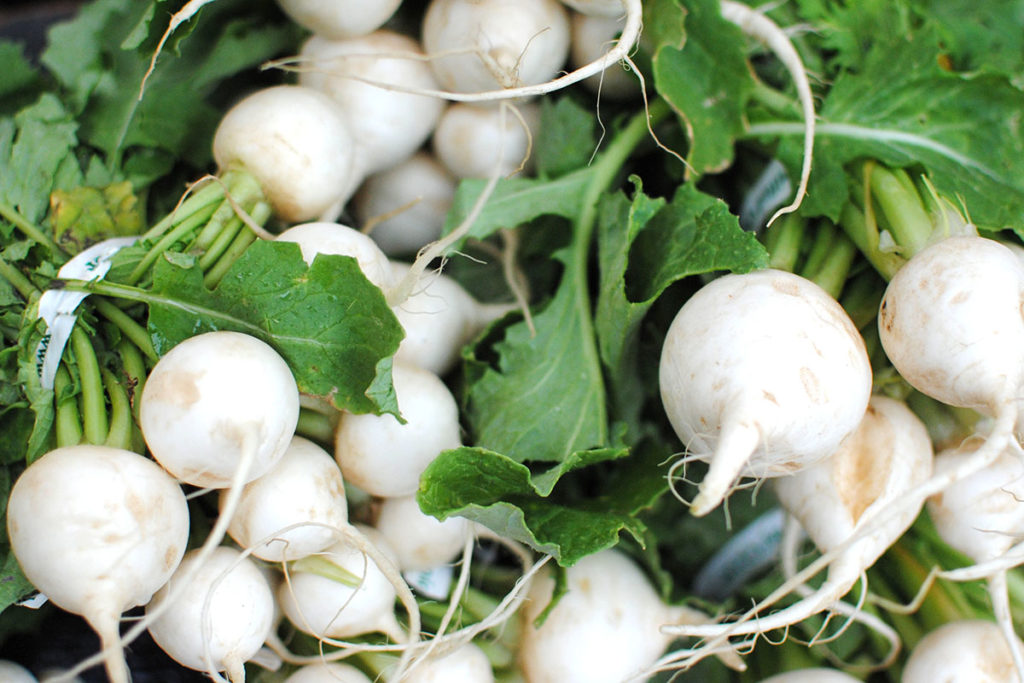
Turnips can be eaten from top to bottom, or more fittingly, root to bulb. The small, tender varieties are grown for human consumption and both the bulb and leaves, which resemble mustard greens, can be enjoyed. The larger varieties, on the other hand, are often used as feed for livestock and the the roots provide a valuable energy source for young animals.
Turnips prefer cold-weather climates and the most common variety is white-skinned with a purple, red, or green blush on the top where the sun has hit. Smaller turnips tend to be sweeter and can be eaten raw, adding a nice crunch to salads, while larger turnips have a nuttier taste and are best when blanched or boiled. To avoid a bitter flavor, place a potato in the water directly next to the turnip.